
Edition 2020
Health technology as commons: trustable, affordable, adaptable
6 humans out of 10 have no access to care or do not adhere to it. hand sanitiser and WikiMed show that creating freely reproducible equipment and software with communities can save millions of lives, increase integrity and reduce costs by 90%.
Download the posterLaunch video2020 programme (PDF, 6.2 MB)
We will organise a week of participatory activities to promote free and open-source hardware for health as part of the Geneva Health Forum. A collaboration with the Open Geneva festival and the University of Geneva.
Text taken from the Breathing Games database.
Hosting and co-organisation
- Geneva Health Forum
- Open Geneva
- University of Geneva
Welcome
The Open Village invites you to experiment with how every human being will be able to live decently and in good health by 2030, according to the agenda set by 193 states. Today, one human in two has no access to essential care. Despite this, in 15 years medical costs have risen by 25% in Switzerland and 17% worldwide.
Freely reproducible hardware and software, such as alcohol-based hand rub or WikiMed, can reduce costs by 90%. For example, 200 million a year could be saved if 200 manufacturers of small MRI scanners adopted open source.
Come and explore and contribute to freely reproducible health projects. Our results: a good practice guide and a manifesto to support open communities.
Fabio Balli, Open Village leadÉric Comte, director, Geneva Health ForumThomas Maillart, president Open Geneva festival
Welcome message from the Open Village 2020 programme (festival document).
Events
-
Pooling projects
-
Contributing to access to care
-
Fablab: reproducing open hardware
-
Pooling good practices
Projects
Taking care of our breathing through play
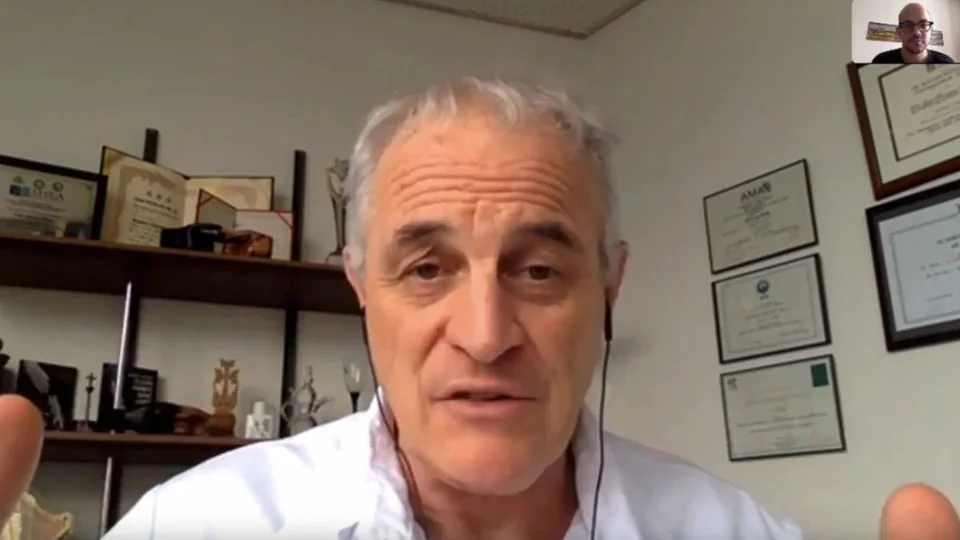
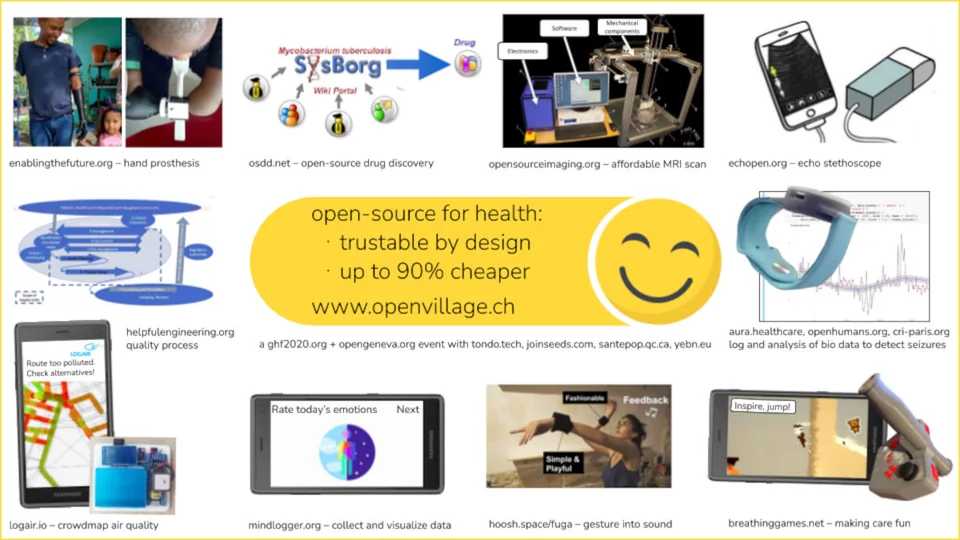
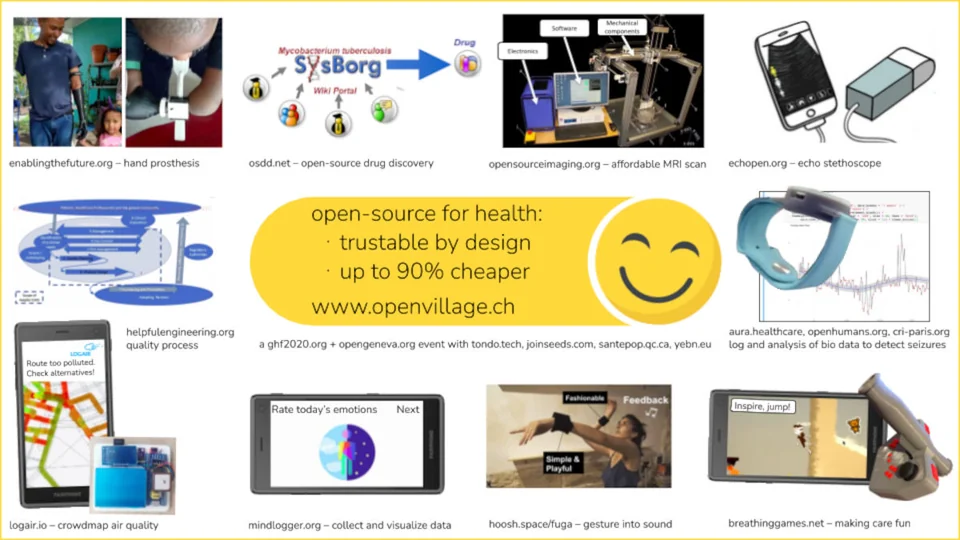
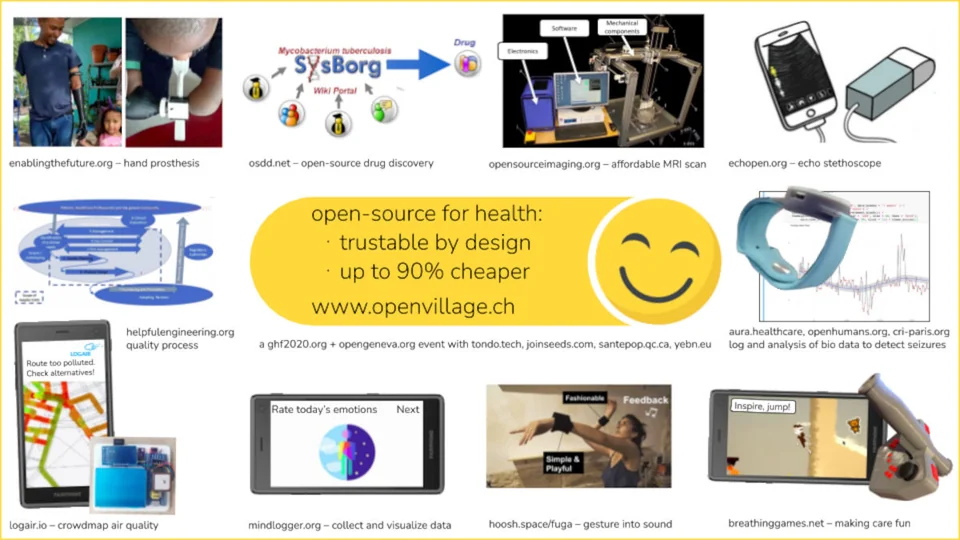
In Switzerland, one child in ten has asthma and one senior in twenty has COPD, a disease caused by pollution and smoking. Breathing Games is developing a multiplayer game and a breath sensor to promote respiratory health.
Ultrasound at your fingertips
One person in three has access to medical imaging. A portable ultrasound device normally costs $8–22K. EchOpen is developing a probe that displays organs on a smartphone to guide diagnosis and streamline patient care.
Living better with and understanding epilepsy
17 million people with epilepsy are drug-resistant. Their seizures cause daily stress and social exclusion. The Aura association is developing a connected patch that relies on three biological parameters to detect potential seizures and alert the patient.
Hand prostheses to make daily life easier
A hand prosthesis generally costs $6–10K. Enable brings together more than 30,000 volunteers who design and distribute 3D-printed hand prostheses to vulnerable people, allowing them to hold an object of a few kilos and keep their balance.
Raising awareness of air pollution
In Switzerland, one premature death in seven is linked to air pollution. LogAir helps everyone map air quality (fine particles) with inexpensive devices. The data produced can help avoid pollution and make cities more sustainable.
Fostering ownership of health data
Open Humans is a virtual ecosystem and a vibrant community dedicated to empowering individuals and communities over their personal health data, enabling it to be explored and shared for educational, medical and research purposes.
Making medical imaging accessible
Medical imaging is crucial to diagnose, understand and treat many diseases. The Open Source Imaging initiative brings together experts to create MRI scanners that can be built and maintained for a fraction of the price of current instruments.
Medicines produced with integrity
India has a pioneering approach to pharmaceuticals. Open Source Drug Discovery brings together 7,900 people who collectively develop open-source, lower-cost therapies for neglected diseases such as tuberculosis, malaria and leishmaniasis.
Giving sound to gestures
Fuga explores the potential of open technologies for the prevention, diagnosis, monitoring and rehabilitation of mental disorders, in relation to recent advances in psychiatry and neuroscience.
Thanks to the Quebec Population Health Research Network and the Young European Biotech Network for promoting our event.
Programme of the Open Village 2020 (festival document).